
Have you ever heard of a religious practice where a grown man is told to breastfeed from a woman who’s not his mother, just to make it okay for him to be around her without strict rules? In Islam, this is called “rada’ al-kabir” or adult suckling. It’s based on stories from the time of Prophet Muhammad. Today, we’ll dive into this topic using real references from the Quran and hadiths. We’ll see how it started, why it happened, and ask some hard questions. If you’re a Muslim, think about this: Does this practice feel right, or does it make you question things?
It all begins with a verse from the Quran that no longer exists. Yes, you read that right. A hadith says a verse about stoning people and breastfeeding adults ten times was revealed. But after the Prophet died, a sheep ate the paper it was written on. We’ll focus on the breastfeeding part here, not stoning. This lost verse was meant to set rules for making family ties through milk, even for adults.
Let’s look at the reference for this:
Sunan Ibn Majah 1944 (Grade: Hasan)
Arabic: حَدَّثَنَا أَبُو سَلَمَةَ، يَحْيَى بْنُ خَلَفٍ حَدَّثَنَا عَبْدُ الأَعْلَى، عَنْ مُحَمَّدِ بْنِ إِسْحَاقَ، عَنْ عَبْدِ اللَّهِ بْنِ أَبِي بَكْرٍ، عَنْ عَمْرَةَ، عَنْ عَائِشَةَ، . وَعَنْ عَبْدِ الرَّحْمَنِ بْنِ الْقَاسِمِ، عَنْ أَبِيهِ، عَنْ عَائِشَةَ، قَالَتْ لَقَدْ نَزَلَتْ آيَةُ الرَّجْمِ وَرَضَاعَةُ الْكَبِيرِ عَشْرًا وَلَقَدْ كَانَ فِي صَحِيفَةٍ تَحْتَ سَرِيرِي فَلَمَّا مَاتَ رَسُولُ اللَّهِ ـ صلى الله عليه وسلم ـ وَتَشَاغَلْنَا بِمَوْتِهِ دَخَلَ دَاجِنٌ فَأَكَلَهَا
English: It was narrated that ‘Aishah said: “The Verse of stoning and of breastfeeding an adult ten times was revealed, and the paper was with me under my pillow. When the Messenger of Allah died, we were preoccupied with his death, and a tame sheep came in and ate it.”
This hadith with similar wording is also mentioned in Sahih Muslim 1452a (Grade: Sahih).
Muslims, if the Quran is perfectly preserved by Allah, why would He let a sheep eat part of it? Doesn’t this story make you wonder if other verses might be missing too?
Now, what is adult breastfeeding? In simple terms, it’s when a woman lets a grown man suckle her breast milk. The idea is that this creates a “milk kinship.” In Islam, if a baby drinks a woman’s milk, he becomes like her son and can’t marry her or her daughters. He also doesn’t have to follow hijab rules around her. But here, it’s for adults. The Prophet allowed it in one case to solve a family problem.
The main story is about Salim, a freed slave adopted by Abu Hudhaifah. After Islam banned adoption in the old way, Salim was no longer seen as family. But he lived in the house and saw Sahlah (Abu Hudhaifah’s wife) without full covering. This made Abu Hudhaifah jealous. Sahlah asked the Prophet for help, and he said: breastfeed Salim, even though he was grown.
Here’s a key reference:
Sahih Muslim 1453a (Grade: Sahih)
Arabic: حَدَّثَنَا أَبُو بَكْرِ بْنُ أَبِي شَيْبَةَ، حَدَّثَنَا عَلِيُّ بْنُ مُسْهِرٍ، عَنِ الشَّيْبَانِيِّ، عَنْ عَبْدِ الرَّحْمَنِ بْنِ الأَقْرَعِ، عَنْ عَبْدِ اللَّهِ بْنِ مَسْعُودٍ، قَالَ قَالَ رَسُولُ اللَّهِ صلى الله عليه وسلم “ أَرْضِعِيهِ ” . قَالَتْ كَيْفَ أُرْضِعُهُ وَهُوَ رَجُلٌ كَبِيرٌ فَتَبَسَّمَ رَسُولُ اللَّهِ صلى الله عليه وسلم وَقَالَ “ قَدْ عَلِمْتُ أَنَّهُ رَجُلٌ كَبِيرٌ ” . وَزَادَ فِيهِ عَمْرٌو عَنِ الْمِنْهَالِ عَنْ سَعِيدٍ عَنِ ابْنِ عَبَّاسٍ وَكَانَ لَهُ ذَلِكَ مِنْهُ فِي غَزْوَةِ بَدْرٍ وَفِي حَدِيثِ ابْنِ عُمَرَ أَنَّ رَسُولَ اللَّهِ صلى الله عليه وسلم ضَحِكَ
English: ‘A’isha (Allah be pleased with her) reported that Sahla bint Suhail came to Allah’s Apostle (may peace be upon him) and said: Messenger of Allah, I see on the face of Abu Hudhaifa (signs of disgust) on entering of Salim (who is an ally) into (our house), whereupon Allah’s Apostle (ﷺ) said: Suckle him. She said: How can I suckle him as he is a grown-up man? Allah’s Messenger (ﷺ) smiled and said: I already know that he is a young man. ‘Amr has made this addition in his narration that he participated in the Battle of Badr and in the narration of Ibn ‘Umar (the words are): Allah’s Messenger (ﷺ) laughed.
This hadith with similar wording is also mentioned in Sahih Muslim 1453b (Grade: Sahih), Sahih Muslim 1453c (Grade: Sahih), Sunan Abi Dawud 2061 (Grade: Sahih), Sunan an-Nasa’i 3319 (Grade: Sahih), Sunan an-Nasa’i 3320 (Grade: Sahih), Sunan an-Nasa’i 3321 (Grade: Sahih), and Sunan an-Nasa’i 3323 (Grade: Sahih) and in Masnad Ahmed Ahmed Hadith No: 26330
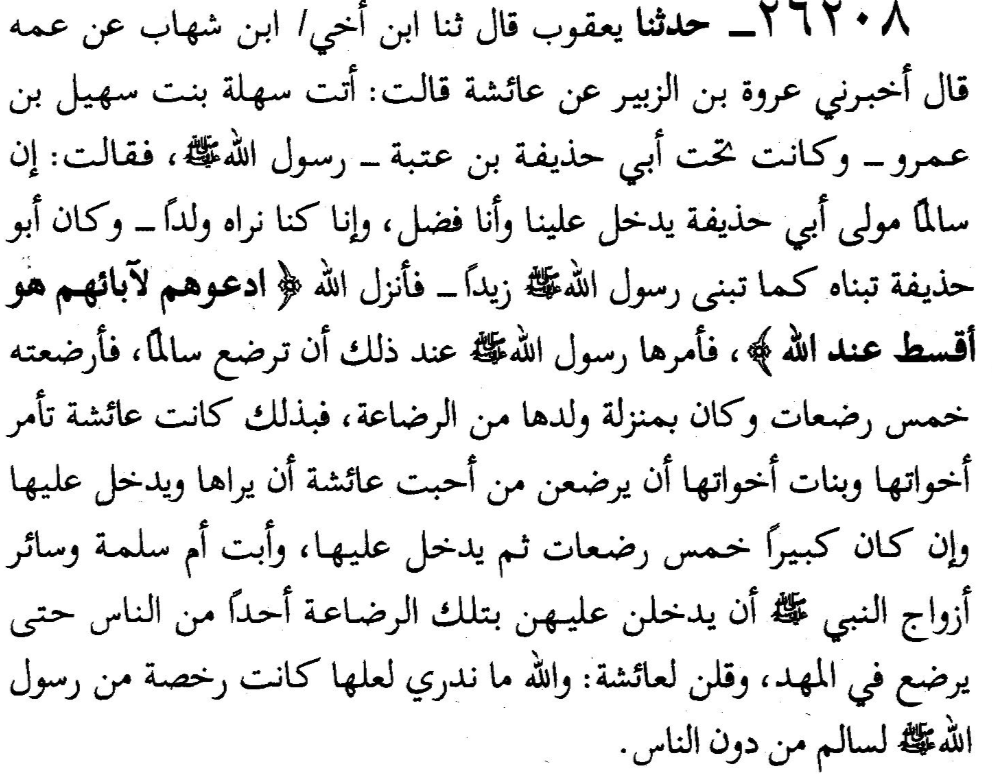
In easy words: Sahlah was worried because her husband didn’t like Salim seeing her uncovered. The Prophet said, “Just breastfeed him five times.” Sahlah was shocked—Salim had a beard! But she did it, and the jealousy went away. This made Salim like a son to her through milk.
Aisha, one of the Prophet’s wives, liked this idea. She told the daughters of her sisters and brothers to breastfeed men she wanted to meet freely. This might include relatives like Umm Kulthum bint Abu Bakrr. Aisha used this to avoid strict hijab with those men.
Muwatta Malik Book 30, Hadith 7,Arabic reference : Book 30, Hadith 1281:
وَحَدَّثَنِي عَنْ مَالِكٍ، عَنْ نَافِعٍ، أَنَّ سَالِمَ بْنَ عَبْدِ اللَّهِ بْنِ عُمَرَ، أَخْبَرَهُ أَنَّ عَائِشَةَ أُمَّ الْمُؤْمِنِينَ أَرْسَلَتْ بِهِ وَهُوَ يَرْضَعُ إِلَى أُخْتِهَا أُمِّ كُلْثُومٍ بِنْتِ أَبِي بَكْرٍ الصِّدِّيقِ فَقَالَتْ أَرْضِعِيهِ عَشْرَ رَضَعَاتٍ حَتَّى يَدْخُلَ عَلَىَّ . قَالَ سَالِمٌ فَأَرْضَعَتْنِي أُمُّ كُلْثُومٍ ثَلاَثَ رَضَعَاتٍ ثُمَّ مَرِضَتْ فَلَمْ تُرْضِعْنِي غَيْرَ ثَلاَثِ رَضَعَاتٍ فَلَمْ أَكُنْ أَدْخُلُ عَلَى عَائِشَةَ مِنْ أَجْلِ أَنَّ أُمَّ كُلْثُومٍ لَمْ تُتِمَّ لِي عَشْرَ رَضَعَاتٍ .
English:
Yahya related to me from Malik from Nafi that Salim ibn Abdullah ibn Umar informed him that A’isha umm al-muminin sent him away while he was being nursed to her sister Umm Kulthum bint Abi Bakr as-Siddiq and said, “Suckle him ten times so that he can come in to see me.”
Salim said, “Umm Kulthum nursed me three times and then fell ill, so that she only nursed me three times. I could not go in to see A’isha because Umm Kulthum did not finish for me the ten times.”
But not everyone agreed. The Prophet’s other wives, like Umm Salamah, said no way. They thought this was a special rule just for Salim, not for everyone.
See this reference:
Sunan an-Nasa’i 3324 (Grade: Sahih)
Arabic: أَخْبَرَنَا يُونُسُ بْنُ عَبْدِ الأَعْلَى، قَالَ أَنْبَأَنَا ابْنُ وَهْبٍ، قَالَ أَخْبَرَنِي يُونُسُ، وَمَالِكٌ، عَنِ ابْنِ شِهَابٍ، عَنْ عُرْوَةَ، قَالَ أَبَى سَائِرُ أَزْوَاجِ النَّبِيِّ صلى الله عليه وسلم أَنْ يَدْخُلَ عَلَيْهِنَّ بِتِلْكَ الرَّضْعَةِ أَحَدٌ مِنَ النَّاسِ – يُرِيدُ رَضَاعَةَ الْكَبِيرِ – وَقُلْنَ لِعَائِشَةَ وَاللَّهِ مَا نُرَى الَّذِي أَمَرَ رَسُولُ اللَّهِ صلى الله عليه وسلم سَهْلَةَ بِنْتَ سُهَيْلٍ إِلاَّ رُخْصَةً فِي رَضَاعَةِ سَالِمٍ وَحْدَهُ مِنْ رَسُولِ اللَّهِ صلى الله عليه وسلم وَاللَّهِ لاَ يَدْخُلُ عَلَيْنَا أَحَدٌ بِهَذِهِ الرَّضْعَةِ وَلاَ يَرَانَا
English: It was narrated that ‘Urwah said: “The rest of the wives of the Prophet refused for anyone to enter upon them on the basis of that type of breast-feeding, meaning breast-feeding of an adult. They said to ‘Aishah: ‘By Allah, we think that what the Messenger of Allah told Sahlah bint Suhail to do was a concession which was granted by the Messenger of Allah only with regard to breast-feeding Salim. By Allah, no one will enter upon us, nor see us on the basis of this type of breast-feeding.'”
This hadith with similar wording is also mentioned in Sunan an-Nasa’i 3325 (Grade: Sahih).
Even the Prophet’s wives thought this was too weird and refused to do it for others. If they saw it as a one-time thing, why did Aisha keep using it? And Muslims, if this came from Allah, why didn’t all the wives follow it? Doesn’t this show confusion in early Islam?
Some say the breastfeeding wasn’t direct sucking but maybe from a cup. But the hadiths say “arḍiʿīhi” which means suckle, like a baby does. It’s awkward, right? Imagine a grown man doing that today. Would you want your wife or sister to breastfeed a friend just to hang out?
Logically, this practice seems unnecessary. Islam has rules for adoption and mahram, so why add this strange step? It could lead to embarrassment or worse. If Allah is all-wise, why reveal something so odd that even close companions disagreed on it?
Muslims, ask yourself: Does this fit a perfect religion? Or does it feel like a made-up fix for a problem back then? Think about it—maybe it’s time to question these old stories.
Refuting Claim: It was not the direct sucking
Some people claim that the breastfeeding (rada’ al-kabir) in the hadiths wasn’t direct sucking from the breast, but instead the woman expressed her milk into a cup, vessel, or container, and the adult man drank it from there. This idea is common among some modern Muslim apologists and scholars trying to make the practice sound less awkward or inappropriate.
But is this what the original hadiths actually say? Let’s look at the evidence clearly and simply.
What the Hadiths Themselves Say
The key hadiths use words like “arḍiʿīhi” (أَرْضِعِيهِ), which literally means “suckle him” or “breastfeed him” — the same verb used for a baby nursing directly from the breast (putting mouth to nipple and sucking). [See Almaany Dictionary]. This appears in the most authentic collections:
- Sahih Muslim 1453a (Grade: Sahih) Arabic: … قَالَ رَسُولُ اللَّهِ صلى الله عليه وسلم “ أَرْضِعِيهِ ” … English: The Messenger of Allah (ﷺ) said: “Suckle him.” She said: How can I suckle him as he is a grown-up man? Allah’s Messenger (ﷺ) smiled and said: I already know that he is a young man.
The word “arḍiʿīhi” strongly implies direct suckling, not pouring into a cup. The woman’s shock (“he’s a grown man with a beard!”) and the Prophet’s smile/laughter in response fit better with the direct, physical act than with a simple cup of milk.
Similar wording is in other Sahih narrations, like Sahih Muslim 1453b, Sunan Abi Dawud 2061, and various in Sunan an-Nasa’i.
None of these core hadiths (from Bukhari/Muslim level sources) mention a cup, vessel, pouring, or indirect drinking. The Prophet’s command is straightforward: suckle/feed him directly.
Where Does the “Cup” Idea Come From?
The cup/vessel interpretation comes from later scholars’ opinions and weaker or secondary reports, not the primary hadiths:
- Some classical scholars like al-Qadi Iyad, an-Nawawi (in his commentary on Sahih Muslim), and others suggested it might have been milk expressed into a container to avoid direct contact. They said things like: “Perhaps she milked herself into a container and he drank it without touching her breast.”
- Reports from books like Tabaqat Ibn Sa’d (a historical biography collection, not a hadith collection like Sahih Muslim) say Sahla poured milk into a vessel for five days, and Salim drank from it.
- These are not in the Sahih chains and are seen by many as explanatory additions or interpretations to soften the hadith.
Even scholars who prefer the cup view admit it’s an interpretation (“perhaps,” “it is possible”), not stated in the authentic hadiths. Some modern defenders (on sites like abuaminaelias.com or islamqa-style answers) push the cup version hard, but critics point out it contradicts the literal Arabic wording and the context of the woman’s hesitation.
Why This Matters
If it was just “drink milk from a cup,” why would Sahlah be so shocked and ask “how can I do that to a grown man”? A cup of milk isn’t embarrassing or intimate. The direct suckling explains her reaction and the Prophet’s amused response.
Muslims, think about this logically:
- The strongest hadiths (Sahih Muslim, etc.) use language that means direct nursing.
- The “cup” fix is a later scholarly guess to avoid discomfort, but it’s not in the Prophet’s words.
- If even scholars had to “reinterpret” it this way, doesn’t that show the original narration is problematic on its face?
In the end, the hadiths describe direct suckling. The cup idea is an apologetic addition, not what the texts actually report. This practice remains one of the more controversial and debated parts of early Islamic history.