
In the world of religious stories, some ideas stand out as strange and hard to believe. Islam teaches that Prophet Muhammad was a perfect example for people to follow. But what if I told you there are several hadiths—stories from his life—that talk about his urine being drunk by others, and it bringing them health benefits? These tales come from trusted Islamic books, and they raise big questions. Is this a sign of his special status, or does it show how old beliefs mixed with religion? As a Muslim, have you ever wondered why a prophet’s bodily waste would be seen as a cure? Let’s look at the references closely and think about what they really mean.
These hadiths mostly tell the same story: A woman accidentally drinks the Prophet’s urine from a container, thinking it’s water. When he finds out, he doesn’t get angry. Instead, he laughs and says she’ll never have stomach problems again. This suggests his urine has some kind of healing power. But why? In regular Islamic rules, human urine is impure and must be cleaned off for prayers. So, was the Prophet’s urine different? If so, does that make him more than human? Let’s dive into the details from the sources.
The Story from Umm Ayman in Al-Mu’jam al-Kabir
One of the key accounts comes from Al-Tabrani Hadith No. 21791 (from Al-Mu’jam al-Kabir, Hadith 21791). This is graded as Gharib (rare, with a single narrator at some point), but it’s often cited in discussions. Alternative: https://dorar.net/hadith/sharh/133844
Arabic: الطبراني:٢١٧٩١ – حَدَّثَنَا الْحُسَيْنُ بْنُ إِسْحَاقَ التُّسْتَرِيُّ ثنا عُثْمَانُ بْنُ أَبِي شَيْبَةَ ثنا شَبَابَةُ بْنُ سَوَّارٍ حَدَّثَنِي أَبُو مَالِكٍ النَّخَعِيُّ عَنِ الْأَسْوَدِ بْنِ قَيْسٍ عَنْ نُبَيْحٍ الْعَنَزِيِّ عَنْ أُمِّ أَيْمَنَ قَالَتْ قَامَ رَسُولُ اللهِ ﷺ مِنَ اللَّيْلِ إِلَى فَخَّارَةٍ فِي جَانِبِ الْبَيْتِ فَبَالَ فِيهَا فَقُمْتُ مِنَ اللَّيْلِ وَأَنَا عَطْشَانَةُ فَشَرِبْتُ مَا فِيهَا وَأَنَا لَا أَشْعُرُ فَلَمَّا أَصْبَحَ النَّبِيُّ ﷺ قَالَ «يَا أُمَّ أَيْمَنَ قَوْمِي فَأَهْرِيقِي مَا فِي تِلْكَ الْفَخَّارَةِ» قُلْتُ قَدْ وَاللهِ شَرِبْتُ مَا فِيهَا قَالَتْ فَضَحِكَ رَسُولُ اللهِ ﷺ حَتَّى بَدَتْ نَوَاجِذُهُ ثُمَّ قَالَ «أَمَا إِنَّكِ لَا تَتَّجِعِينَ بَطْنَكِ أَبَدًا»
English Translation: Umm Ayman said: The Messenger of Allah stood up at night and went to a jug by the side of the house. He urinated in it. I got up at night while I was thirsty and drank what was in it without realizing. In the morning, the Prophet said, “O Umm Ayman, go and pour out what is in that jug.” I said, “By Allah, I drank what was in it.” The Messenger of Allah laughed until his molars showed, then said, “Indeed, you will never feel pain in your stomach again.”
Think about this: If urine is normally dirty in Islam, why does this hadith make it sound like a blessing? As a Muslim, does this fit with the idea that all people, even prophets, have normal bodies? Or does it turn Muhammad into something superhuman, like in other old myths?
A Similar Account in Mustadrak al-Hakim
Another version is in Mustadrak al-Hakim Hadith No. 6912 (from Al-Mustadrak ala al-Sahihayn, Book of Etiquette, Hadith 6912). Al-Hakim considered it authentic, but Dhahabi was silent on it in his summary, which some see as acceptance. It’s often viewed as Hasan (good).
Arabic: أَخْبَرَنَا أَحْمَدُ بْنُ كَامِلٍ الْقَاضِي، ثَنَا عَبْدُ اللَّهِ بْنُ رَوْحٍ الْمَدَايِنِيُّ، ثَنَا شَبَابَةُ، ثَنَا أَبُو مَالِكٍ النَّخَعِيُّ، عَنِ الْأَسْوَدِ بْنِ قَيْسٍ، عَنْ نُبَيْحٍ الْعَنَزِيِّ، عَنْ أُمِّ أَيْمَنَ، رَضِيَ اللَّهُ عَنْهَا قَالَتْ: قَامَ النَّبِيُّ صَلَّى اللهُ عَلَيْهِ وَسَلَّمَ مِنَ اللَّيْلِ إِلَيَّ فَخَّارَةٍ مِنْ جَانِبِ الْبَيْتِ فَبَالَ فِيهَا فَقُمْتُ مِنَ اللَّيْلِ وَأَنَا عَطْشَى فَشَرِبْتُ مِنْ فِي الْفَخَّارَةِ وَأَنَا لَا أَشْعُرُ، فَلَمَّا أَصْبَحَ النَّبِيُّ صَلَّى اللهُ عَلَيْهِ وَسَلَّمَ، قَالَ: «يَا أُمَّ أَيْمَنَ قَوْمِي إِلَى تِلْكَ الْفَخَّارَةِ فَأَهْرِيقِي مَا فِيهَا» قُلْتُ: قَدْ وَاللَّهِ شَرِبْتُ مَا فِيهَا. قَالَ: فَضَحِكَ رَسُولُ اللَّهِ صَلَّى اللهُ عَلَيْهِ وَسَلَّمَ حَتَّى بَدَتْ نَوَاجِذُهُ ثُمَّ قَالَ: «أَمَا إِنَّكِ لَا يَفْجَعُ بَطْنُكِ بَعْدَهُ أَبَدًا»
English Translation: Umm Ayman said: The Prophet got up at night to a clay pot on the side of the house and urinated in it. I got up at night thirsty and drank from the pot without realizing. In the morning, the Prophet said, “O Umm Ayman, go to that pot and pour out what is in it.” I said, “By Allah, I drank what was in it.” The Messenger of Allah laughed until his molars appeared, then said, “Indeed, your stomach will never hurt after this.”
Urdu Translation: حضرت ام ایمن رضی اللہ عنہا فرماتی ہیں : ایک دفعہ نبی اکرم ﷺ رات کے وقت بیدار ہوئے ، کمرے کے کونے میں رکھے ہوئے ایک پیالے میں پیشاب کیا ، رات میں میری آنکھ کھلی ، مجھے اس وقت پیاس لگ رہی تھی ، میں نے اس پیالے سے پی لیا ۔ مجھے ذرا بھی اندازہ نہ ہوا کہ میں نے پیشاب پی لیا ہے ، صبح ہوئی تو نبی اکرم ﷺ نے فرمایا : اے ام ایمن ! اٹھو اور فلاں پیالے میں جو کچھ ہے اس کو انڈیل دو ، میں نے کہا : اللہ کی قسم ! یا رسول اللہ ﷺ میں نے تو اس کو پی لیا ہے ، راوی کہتے ہیں : رسول اللہ ﷺ مسکرائے ، حتیٰ کہ آپ کے داندان مبارک ظاہر ہو گئے ، آپ ﷺ نے فرمایا : آج کے بعد تجھے پیٹ کی بیماری کبھی نہیں لگے گی ۔
Why laugh about something like this? If this was just a joke, why promise no more pain? Muslims, does this make you question if these stories were added later to make the Prophet seem magical?
From the Sira: Ibn Kathir’s Account
In The Life of the Prophet Muhammad Volume 4 (Al-Sira al-Nabawiyya by Ibn Kathir, page 462), it draws from Abu Ya’la and others. This is a biographical work, not a hadith collection, but it quotes the story. Grading isn’t specified.
English Translation: The hafiz, Abu Ya’la stated that Muhammad b. Abu Bakr al-Muqaddami related to him, quoting Salim b. Qutayba, from al-Husayn b. Hurayth, from Ya’la b. Ata, from al-Walid b. Abd al-Rahman, from Umm Ayman, who said, “The Messenger of God had a pottery bowl into which he would urinate. When morning came, he would call out, ‘Umm Ayman, pour out the contents of the pot.’ One night I got up feeling thirsty and drank what it contained. And when the Messenger of God called out, ‘Umm Ayman, pour out the contents of the pot’, I replied, ‘Messenger of God, I got up feeling thirsty and drank what was in it!’ He commented, ‘You’ll never suffer from your stomach!’” Ibn al-Athir stated in his work al-Ghaba, “Hajjaj b. Muhammad narrated from Ibn Jurayj, from Hakima, daughter of Umayma, who quoted her mother Umayma, daughter of Raqiqa, as having said, ‘The Prophet had a wooden bowl into which he would urinate and then place beneath his bed. A woman named Baraka came one day and drank it. He asked where it was, being unable to find it, and he was told, “Baraka drank it!” He stated, “She is kept out of hell-fire by a screen!”’” The hafiz Abu al-Hasan b. al-Athir stated, “It is said that the woman who drank the urine of the Prophet was none other than Baraka al-Habashiyya, who came with Umm Habiba from Abyssinia.”
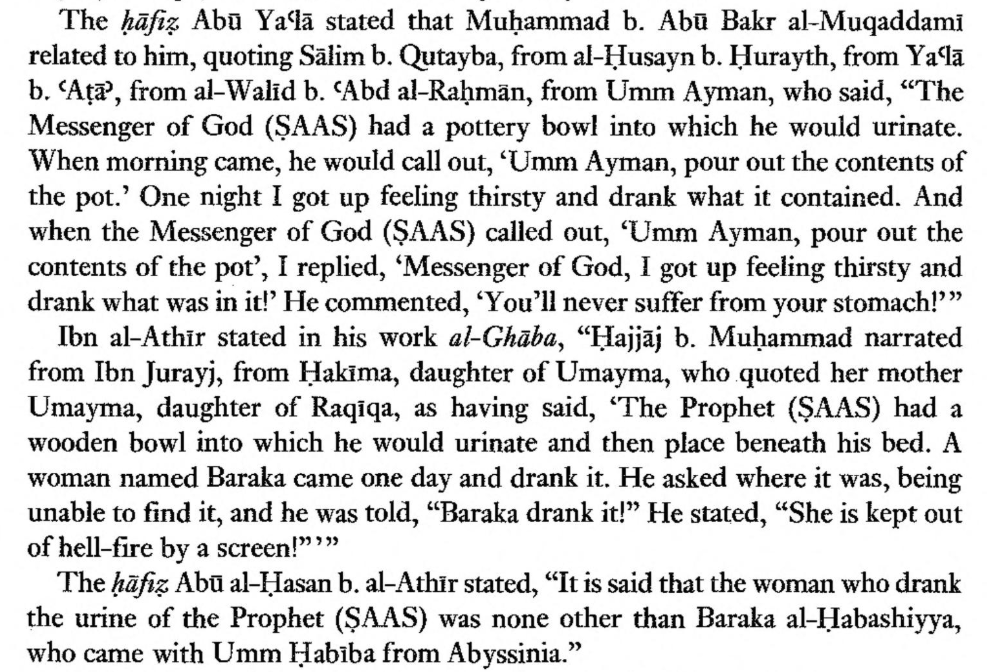
Here, it even says drinking the urine protects from hellfire. Really? If urine can save someone from hell, why pray or follow rules? This seems like a big stretch. As a believer, how do you explain this without it sounding like idol worship?
This one talks about protection from fire—meaning hell. Muslims, if this is true, why isn’t drinking urine a common practice today? Does it challenge the idea that only faith and good deeds save you?
These stories repeat across books, always showing the urine as helpful. But critics point out weak chains—some narrators are unknown or unreliable. Still, they’re in major works. Logically, if the Prophet’s urine cures pain or saves from hell, why not other body fluids? Islam says prophets are human, not gods. Yet this makes Muhammad’s body seem holy, like in pagan tales. As a Muslim, does this strengthen your faith, or make you doubt how these hadiths were collected? Why would God allow such odd stories if they’re not key to the religion?
In the end, these hadiths might just be old folklore mixed in. But they ask us to think: Is religion about logic, or blind belief? What do you think?